Buying Property in Lagos from the Diaspora: A Due-Diligence Checklist
Investing at home from abroad can be rewarding, but only with the right checks. Here is a practical checklist for titles, developers, off-plan payments and financing.
Read articleWhat actually happens when two vessels meet at sea to move fuel, and why planning, fendering and documentation matter as much as the pumps.
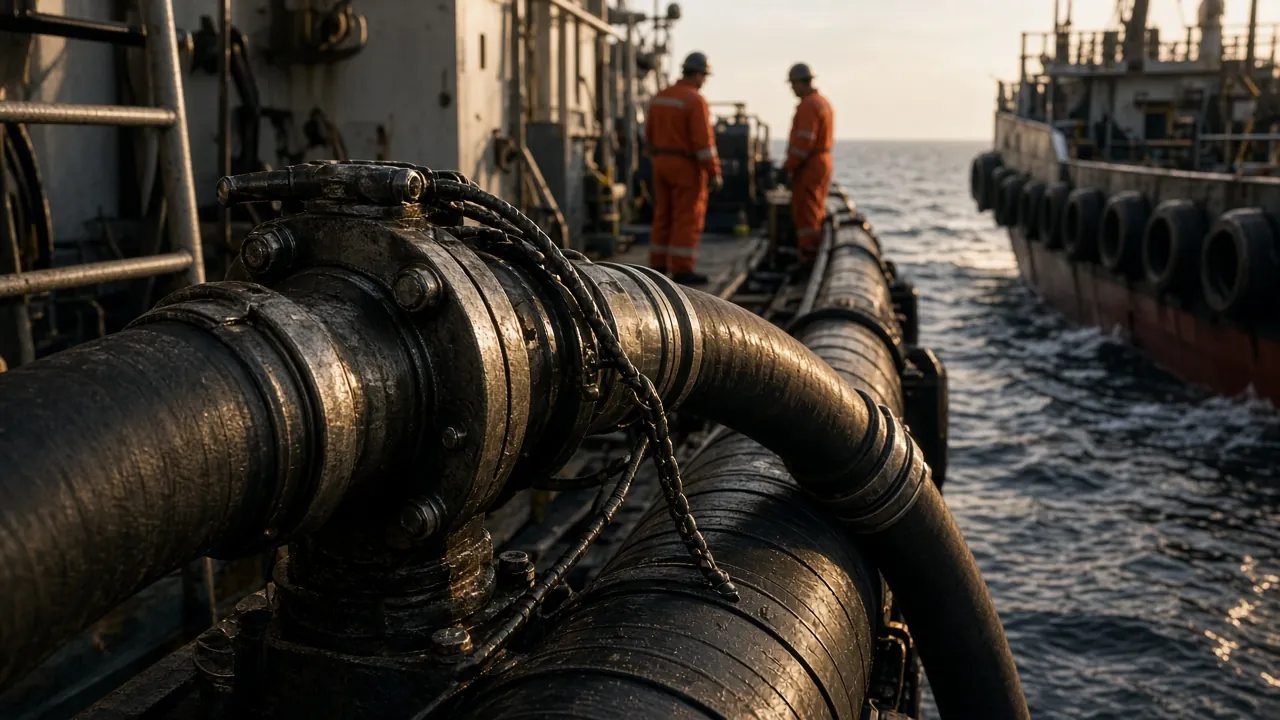
For many people outside the industry, fuel supply means a tanker truck pulling into a filling station. Offshore, the picture is very different. Vessels at anchor, offshore platforms and floating storage units often cannot come alongside a jetty to refuel, so the fuel has to come to them. One of the most important ways that happens is ship-to-ship (STS) transfer: two vessels come together at sea, moor safely side by side, and move product from one to the other through specialised hoses.
At A.N Grant Concepts, STS bunkering is one of the core supply methods we use, alongside barge-to-platform fueling, truck-to-ship port refueling, pipeline transfer where applicable, and helicopter-facilitated deliveries to remote installations. This article walks through what an STS operation involves and why each step matters.
STS operations give the energy supply chain flexibility. A large vessel can deliver product to smaller receiving vessels without every party needing berth space at a crowded port. Operating within designated offshore zones and international maritime areas, such as the waters off Lomé, Togo, also allows transfers to be scheduled around vessel availability rather than port congestion. Done properly, this reduces waiting time for the receiving vessel and keeps offshore operations running.
A safe transfer starts long before the vessels meet. Under MARPOL Annex I, oil tankers that carry out STS cargo transfers must carry an approved STS operations plan, and industry guidance from bodies such as the IMO and the shipping and oil industry associations sets out what good practice looks like. The planning stage typically covers:
The approach is one of the most carefully managed parts of the operation. Large pneumatic fenders are rigged between the hulls to absorb contact energy and keep the vessels apart. One vessel usually maintains a steady course and speed or stays at anchor while the other manoeuvres alongside. Once the vessels are in position, mooring lines are passed and tensioned in an agreed sequence. Only when both masters are satisfied that the vessels are securely moored does the operation move on to connecting hoses.
Hoses are lifted across, connected to the manifolds and pressure-tested. Before any product moves, both sides work through a pre-transfer checklist: valves set correctly, scuppers plugged, spill-response equipment ready, communication tested and emergency shutdown procedures confirmed. Pumping usually starts at a low rate so the crews can check for leaks and confirm that product is arriving where it should, and is then increased to the agreed rate.
Throughout the transfer, both vessels monitor tank levels, mooring tension, hose condition, weather and the relative movement of the two hulls. If conditions change beyond the agreed limits, the transfer is stopped. That discipline is what separates a professional operation from a risky one.
Fuel quality and quantity have to be proven, not assumed. Representative samples are drawn during delivery, sealed and labelled, with copies retained by the parties involved. Quantities are measured before and after transfer, and the delivery is recorded in the shipping documents, including the bill of lading for cargo movements and the bunker delivery note for fuel delivered to a ship.
This is why we place so much weight on a fully traceable documentation chain. For our clients, mostly downstream marketers, depot operators, trading companies and offshore logistics providers, clean paperwork is what allows product to move on smoothly to its next destination, whether that is a depot such as Tonimas in Onne or Shellplux in Ijegun.
When the transfer is complete, hoses are drained and disconnected, blanked off and returned. Mooring lines are released in sequence and the vessels separate under the same careful control as the approach. A short debrief afterwards captures anything that could make the next operation safer or faster.
When planning, equipment and people are right, STS bunkering delivers what offshore clients care about most: reduced downtime, minimised risk of fuel contamination, traceable records and compliance with international safety and environmental standards. Those are the same outcomes we build our marine coordination, vessel scheduling and fuel sampling protocols around.
If you operate vessels, platforms or storage units in the West African maritime corridor and want to discuss an offshore supply requirement, get in touch with our team.


Investing at home from abroad can be rewarding, but only with the right checks. Here is a practical checklist for titles, developers, off-plan payments and financing.
Read article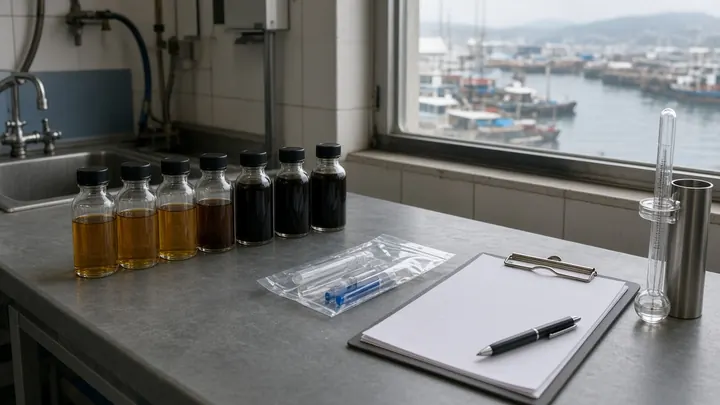
The marine fuel standard every bunker buyer hears about, what it actually covers, and how sampling and paperwork protect both ship and supplier.
Read article